
Architecture Firm Website Guide to Win Better Leads
A practical guide to planning an architecture firm website with project pages, service clarity, local SEO, inquiry forms, CMS updates, and managed hosting.
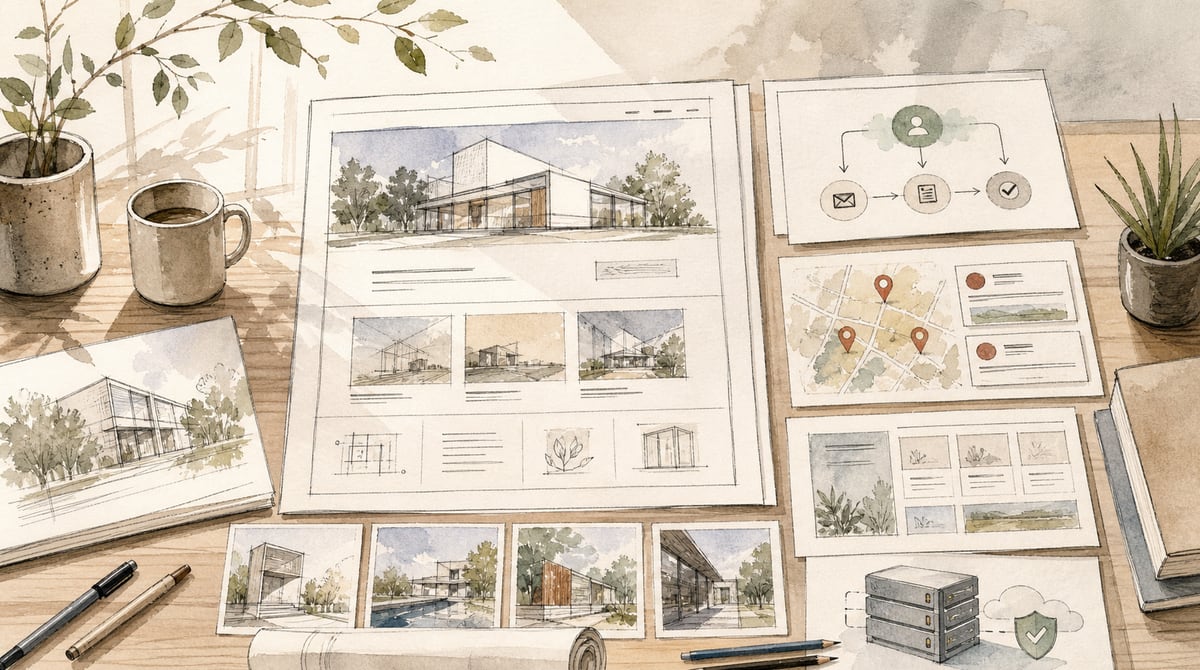
An architecture firm website should do more than display beautiful projects. It should help the right visitor understand your work, trust your process, and take the next step toward a consultation. For small studios, residential architects, interior architecture practices, and local design firms, the site is often the first proof that your work is organized, thoughtful, and worth a serious conversation.
Architecture websites often lean too far into portfolio mood. Strong visuals matter, but a visitor also needs service clarity, project context, location signals, inquiry guidance, and an easy way to update the site as new work is finished.
What should an architecture firm website do first?
Start with the decision the visitor is trying to make.
Most prospective clients arrive with a loose problem: they want to renovate a home, build a custom house, improve a commercial space, open a restaurant, or assess whether a design firm fits their style and budget. The first screen should help them decide whether they are in the right place.
A useful first screen explains:
- The kind of architecture work you do.
- The clients or project types you serve.
- The city, region, or service area where you work.
- One clear next step, such as booking an introductory call or sending a project inquiry.
The goal is not to flatten your brand voice. The goal is to make the opening view useful. Beautiful typography and project photography work harder when the visitor also knows what you do, where you work, and how to start.
Which pages should architect website design include?
Good architect website design separates the firm's story from the buyer's decision path.
Most small architecture firms need these core pages:
- A homepage with positioning, proof, and a primary inquiry path.
- A portfolio or work section.
- Individual project pages.
- A services or expertise page.
- An about page with principal, team, or studio background.
- A contact or project inquiry page.
Separate service pages are useful when each service attracts a different kind of client. A homeowner planning a renovation has different questions from a developer evaluating a feasibility study. A restaurant owner needs different proof from a family building a custom home.
Each service page should answer:
- What type of client or project is this for?
- What problems does the service solve?
- What does the first conversation usually cover?
- Which portfolio examples are relevant?
- What is the next step?
This structure also helps search engines understand the site. Google's SEO Starter Guide explains that SEO is about helping search engines understand content and helping people decide whether to visit. Clear service pages support both.
How should an architecture portfolio website show projects?
An architecture portfolio website should show judgment, not just images.
Large project photos are important, but a portfolio page works best when each project has enough context for a serious visitor. A future client is asking whether you can solve a problem like theirs. They need to see more than a gallery grid.
Strong project pages usually include:
- Project type, such as residential renovation, custom home, restaurant, studio, clinic, retail, or workplace.
- Location or general region, when appropriate to share.
- Constraints, such as existing structure, small lot, phased build, heritage limits, budget sensitivity, or operational continuity.
- A short explanation of the design response.
- Selected photos or drawings with descriptive captions.
- A consultation path near the end.
Avoid turning every project into a long award submission. A visitor should understand the brief, the result, and the relevance to their own project.
Also think carefully about image accessibility. The W3C WAI Images Tutorial explains that images need text alternatives based on their purpose. For architecture websites, alt text should describe useful content, not repeat keywords.
What local SEO details matter for architecture firm SEO?
Architecture firm SEO starts with real-world clarity.
Many architecture searches are local or regional. Your website should make your location and service area easy to understand without forcing awkward keyword repetition.
Include practical local signals:
- Studio city, region, or service area.
- Project locations when they can be shared.
- Contact details that match your public profiles.
- Local project examples.
- A Google Business Profile when the firm is eligible and wants local visibility.
Google Business Profile is designed to help businesses appear on Google Search and Maps with photos, updates, and business information. For architecture firms, it can support local discovery, but it should match the real business. Do not create misleading locations or stuff city names into page copy.
If you serve several cities or regions, create local pages only when they are genuinely useful. A strong local page can explain project types, planning context, representative work, travel approach, and relevant FAQs.
What should a project inquiry form ask?
An architecture inquiry form should qualify the conversation without making the client feel like they are filling out a planning application.
The first form is not the full brief. It is a routing tool. It should help the studio understand whether the inquiry is a fit and what kind of response is needed.
Useful first-step fields include:
- Name.
- Email and phone.
- Project location.
- Project type.
- New build, renovation, interiors, feasibility, or other scope.
- Approximate timeline.
- A short project description.
- Preferred contact method.
Be careful with budget fields. Some firms need a budget range early to avoid poor-fit calls. Others prefer to discuss budget during a consultation. If you ask for budget, explain why.
The confirmation message should set expectations. For example: "We review new project inquiries during business hours and reply with next steps for an introductory conversation when the project appears aligned." Avoid promising exact response times unless the studio can consistently meet them.
A strong process page and selected project examples can improve inquiry quality.
How can project portfolio website pages build trust?
Architecture buyers are making a high-consideration decision. They may care about design taste, technical competence, listening style, planning experience, communication, budget discipline, and whether the firm has handled similar constraints.
Useful trust signals include:
- Principal or team bios.
- Professional registration or memberships, where accurate.
- Awards or press, if relevant and current.
- Client testimonials used with permission.
- Clear process steps.
- Project stories that explain tradeoffs.
- Evidence of relevant project types.
- A privacy-aware contact form.
Specific proof is stronger than broad claims. "We specialize in calm, compact homes on constrained urban lots" says more than "award-winning design solutions."
Keep claims current. If a team member leaves, a certification expires, a service changes, or a project is no longer representative, the CMS should make updates simple. Brimky's guide to CMS for small business websites explains why safe content control matters after launch.
What should be easy to update in the CMS?
Architecture websites become stale when updating them feels like a production job.
New photos arrive. A project wins recognition. A press mention goes live. The studio adds interiors, feasibility studies, or a new location. If every change requires technical support, updates get delayed.
A practical CMS should make these updates manageable:
- Project title, summary, location, scope, and images.
- Project categories or filters.
- Service descriptions.
- Team bios.
- Awards, press, and testimonials.
- SEO titles and meta descriptions.
- Image alt text.
- Inquiry form routing details.
That does not mean every layout setting should be editable. The safer setup gives the firm control over content while the design system keeps spacing, typography, image ratios, and mobile behavior consistent.
For architecture firms, image handling is especially important. A managed setup can define image sizes, fields, captions, and portfolio templates so the site stays polished as work is added.
How should the website support consultations?
The website should lead to a realistic next step, not a generic contact form buried in the footer.
Architecture projects often have a long decision cycle. The site should keep the inquiry path visible without pressuring every visitor too early.
Good consultation support includes:
- A primary inquiry button in the header.
- Contextual calls to action on service and project pages.
- A contact page that explains who should inquire.
- A short note about what happens after submission.
- A way to share the project location and rough scope.
- Analytics or conversion tracking to understand which pages lead to inquiries.
Not every firm needs public calendar booking. The website should match the operating model, not force a tool because it is fashionable.
For a small firm, the best consultation flow is clear, calm, and easy to maintain. It should reduce back-and-forth, not create more administrative work.
How can Brimky help architecture firms launch faster?
Brimky builds managed websites for small businesses from proven templates or custom builds, with CMS, hosting, SSL, domain and DNS setup, forms, local SEO options, analytics, and support handled together.
For an architecture firm, that can mean starting from Brimky's architecture template or planning a custom build around your studio's portfolio, services, and inquiry flow. The important part is that the visual presentation and operating layer are planned together.
Brimky can help structure:
- Homepage positioning.
- Project portfolio pages.
- Service pages.
- Process and about pages.
- Local SEO basics.
- Consultation inquiry forms.
- CMS-editable project fields.
- Image handling and alt text.
- Managed hosting and launch setup.
Browse Brimky architecture and small-business templates or contact Brimky to plan an architecture firm website with portfolio pages, CMS, hosting, and inquiry setup handled in one managed build.
What is the launch checklist for an architecture firm website?
Use this checklist before the site goes live:
- Homepage explains project type, location, style, and next step.
- Core services have clear pages.
- Portfolio projects include context, not only images.
- Project images are optimized for web.
- Alt text describes meaningful images.
- Inquiry form asks only useful first-step questions.
- Contact page sets expectations for next steps.
- Local business details are consistent across the site and public profiles.
- Mobile project galleries are easy to browse.
- SEO titles and meta descriptions are written for key pages.
- Forms, notifications, analytics, and redirects are tested before launch.
The best architecture website feels refined to visitors and practical for the studio. It shows the work, explains the fit, supports local discovery, and makes the next conversation easier to start.
FAQ
How many projects should an architecture firm website show?
Show enough projects to prove range and fit without overwhelming the visitor. Many small firms can start with 6 to 12 strong projects, then add more as the CMS and portfolio structure mature.
Does an architecture firm need separate service pages?
Yes, if the services attract different clients or answer different questions. Residential design, commercial interiors, feasibility studies, and renovations often deserve separate pages.
Should an architect website include prices?
Most architecture firms do not need fixed prices on the website, but they should explain process, fit, and what affects scope. If budget ranges are important, present them carefully and keep them current.
Can Brimky build from an existing architecture portfolio?
Yes. Brimky can start from a template or custom build and structure existing project images, service copy, inquiry forms, CMS fields, hosting, and launch setup into one managed website.